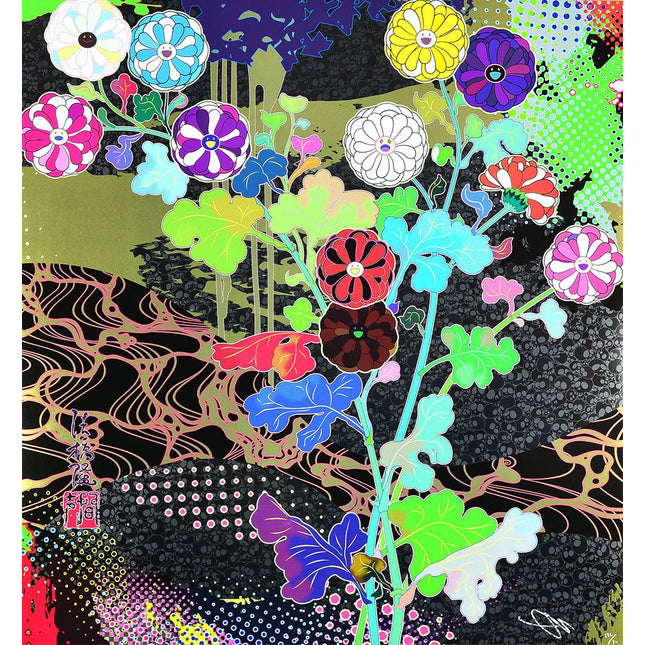
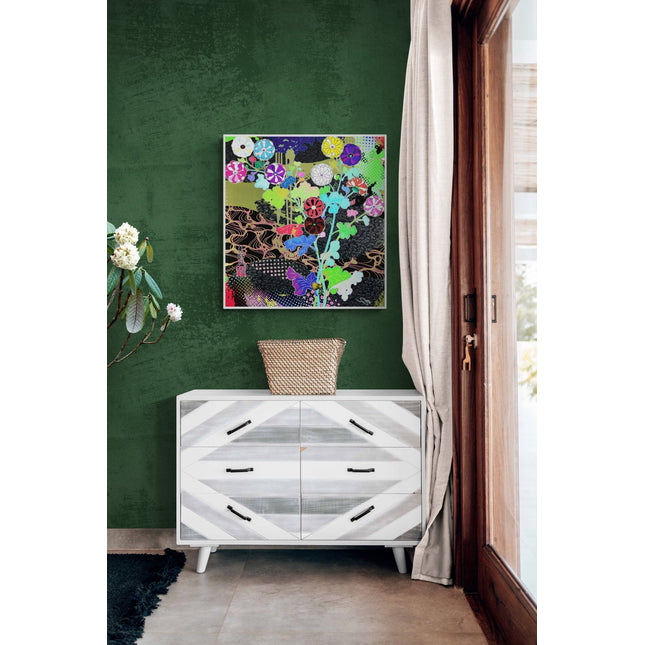
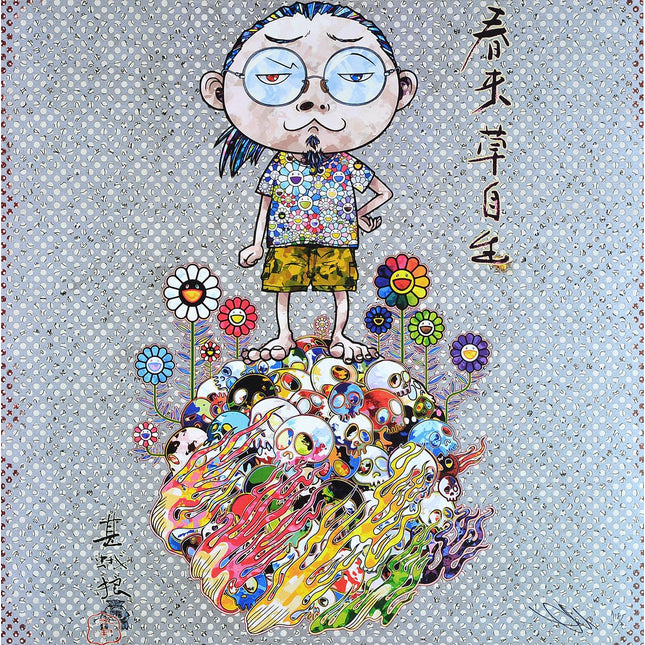
High quality, textured offset lithograph with cold stamp and high gloss varnishing on paper. Hand signed and numbered by Takashi Murakami from a limited edition of 300. Published by Kaikai Kiki Co. Ltd, Japan.
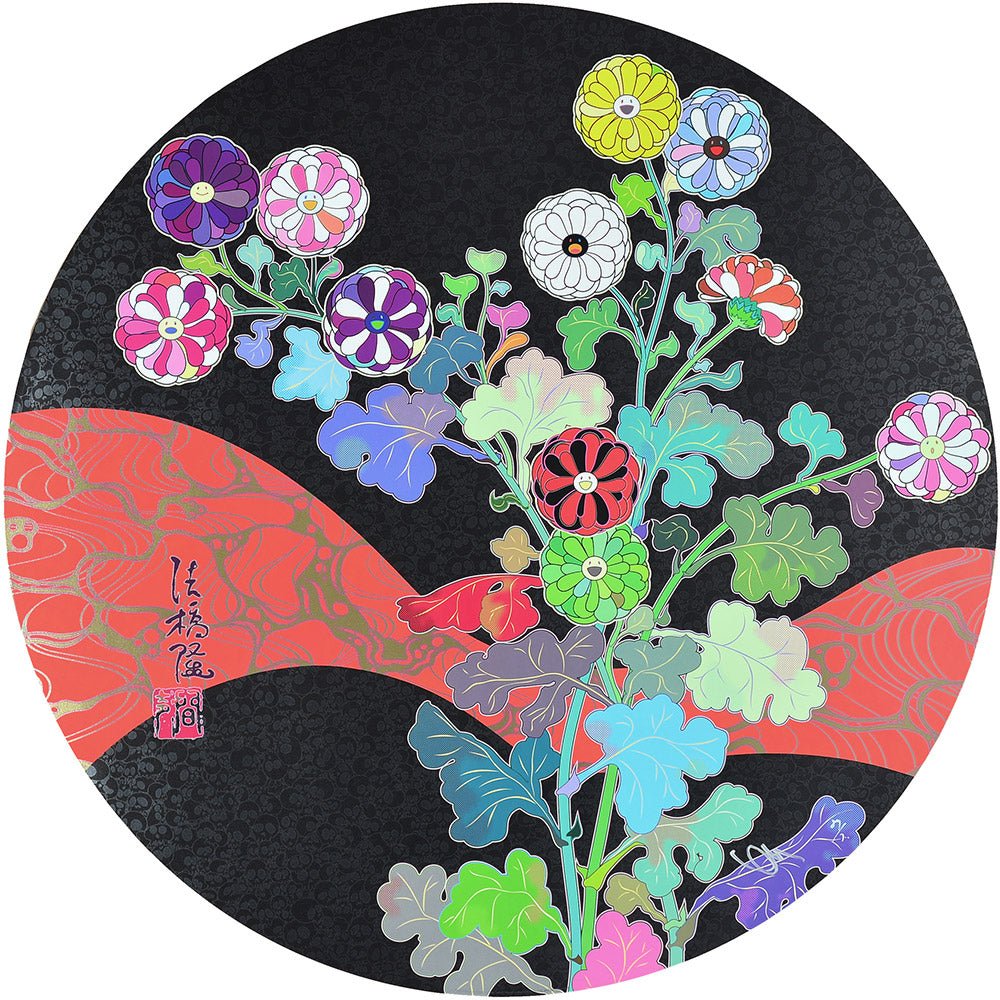
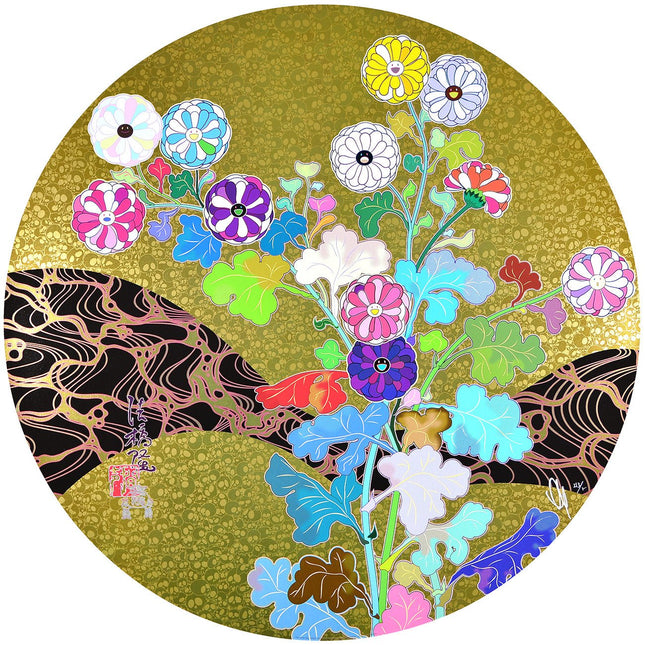
A Red River is Visible begins with a historical echo rather than a narrative scene. The work belongs to Murakami’s sustained dialogue with Ogata Kōrin, one of the defining masters of the Rinpa school, whose paintings transformed flowers, rivers and seasonal motifs into highly stylised fields of rhythm, pattern and luminous surface. In revisiting that legacy, Murakami is not simply quoting an admired predecessor; he is testing how a visual language born in Edo-period Japan can be made to pulse again inside a contemporary image.
The title points us toward one of the key motifs in Kōrin’s art: the river as a formal device rather than a descriptive detail. In Rinpa painting, flowing water often becomes an abstract current, a sweeping band that structures the composition while animating the space around it. Murakami takes up that logic and pushes it in his own direction, where ornamental clarity meets chromatic intensity and historical memory is filtered through the heightened finish of contemporary print culture. What emerges is not a nostalgic homage, but a work that understands tradition as something still active, still available for reinvention.
That is what makes this image so compelling. Rather than relying on Murakami’s best-known cast of characters, A Red River is Visible moves into a different register, one shaped by pattern, flow and the decorative intelligence of Japanese painting. The work feels at once controlled and expansive, with the river functioning less as landscape than as movement itself: a visual current that carries the eye across the surface while holding the composition together. In that sense, the print offers a particularly refined example of how Murakami can move between pop immediacy and historical sophistication without forcing either one.
Kōrin’s influence is especially significant here because his art was never only about natural motifs in a literal sense. Flowers, trees and streams became in his hands vehicles for structure, elegance and visual compression, often set against luminous grounds that dissolved conventional depth. Murakami responds to that inheritance with characteristic precision, translating the spirit of Rinpa into a language that remains crisp, graphic and unmistakably contemporary. The result sits in fertile conversation not only with Japanese tradition, but also with broader questions of surface, flatness and visual impact that run throughout the Superflat movement.
Materially, the edition is as considered as the image itself. The combination of offset lithography, cold stamping and high gloss varnish gives the surface a tactile richness and a shifting play of reflection that suits a composition rooted in ornament and flow. As a signed and numbered work, it also belongs to the wider history of Takashi Murakami’s limited editions, where technical control is inseparable from visual seduction. For collectors interested in the medium as well as the image, Artetrama also offers further reading on contemporary print techniques, curating a print collection, and buying fine art prints.