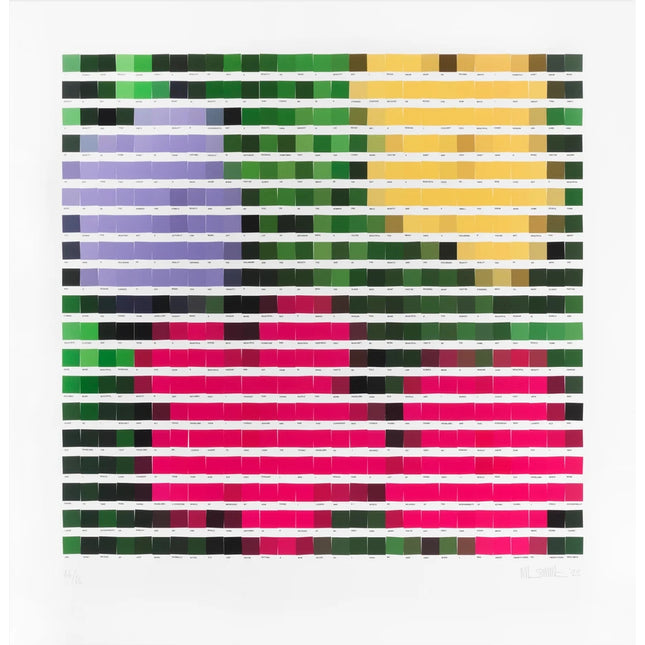
Giclee with Screenprinted Varnish on Canson Rag Photographique 310 gsm Paper, hand signed and numbered by the artist of a limited edition of 127.
The limited edition Peter Getting Out of Nick's Pool by Nick Smith was created from the original collage presented in the 2022 Posed exhibition at Rhodes Contemporary Art Gallery in London. This exhibition explored the concept of pose in art and visual culture, reinterpreting iconic representations of the human figure through Smith's distinctive approach to color patterns and language.
In Posed, Smith investigated how posture and the composition of an image can alter its meaning, paying tribute to significant figures in both classical and contemporary art. Within this theme, Peter Getting Out of Nick's Pool stands out as a reinterpretation of the iconic Peter Getting Out of Nick's Pool (1966) painting by David Hockney, one of the most recognizable images of British Pop figurative art. Through his distinctive collage technique using color fragments, Smith breaks down the image into components that, when viewed up close, contain words associated with each color, adding a conceptual layer that reinforces the dialogue between the image and its meaning.
The technical features of this limited edition include gicleé with screenprinted varnish on 310 gsm Canson Rag Photographique paper. Each piece in the edition is hand-signed and numbered, from an edition of 127. This edition was created from the original collage presented in the aforementioned exhibition, allowing collectors to acquire a unique and high-quality reproduction of this work.
In Posed, Smith took his exploration of visual language to a new level, incorporating references to fashion, pop culture, and art history. The exhibition solidified his evolution as an artist, one who not only reinterprets iconic works but also delves deeper into reflecting on the perception of images in the digital age. Peter Getting Out of Nick's Pool is a clear example of this development, where the artist not only pays tribute to Hockney but also invites the viewer to reflect on the role of the pose in the construction of contemporary visual identity.