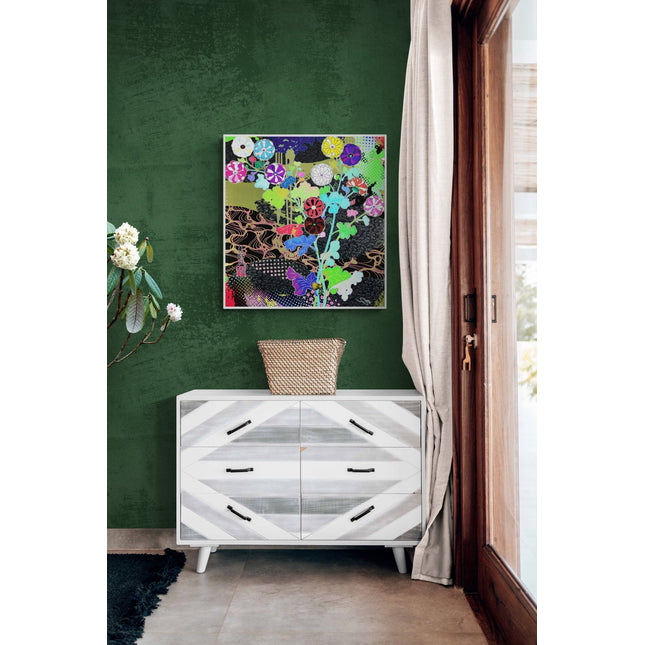
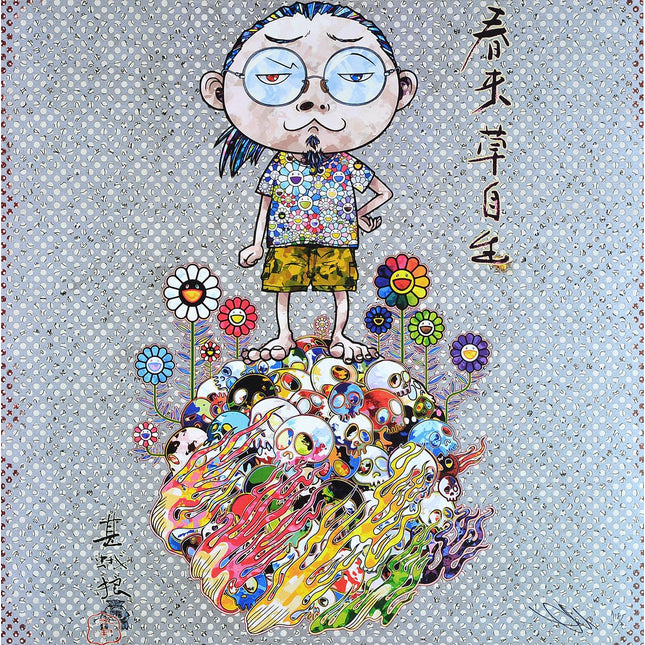
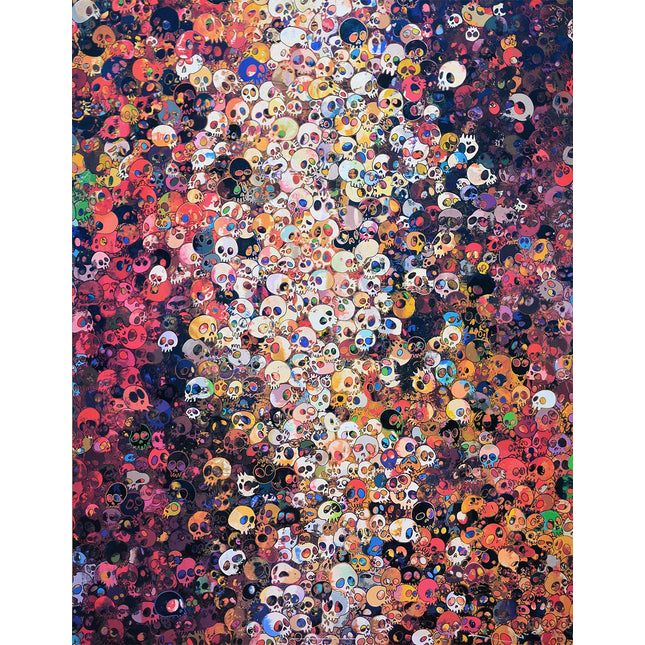
Offset lithograph with cold stamp and high gloss varnishing on paper, hand signed by Takashi Murakami with silver pen and numbered from a limited edition of 300.
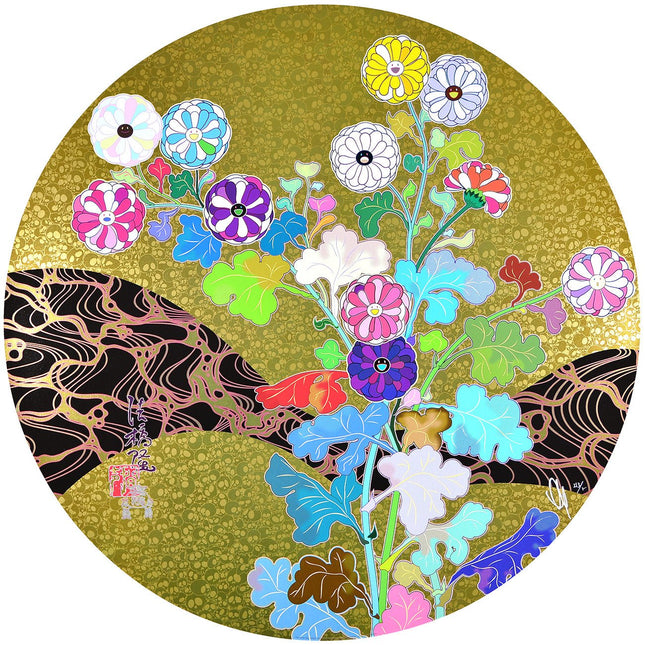
Kōrin: The Golden River is a work in which Takashi Murakami pays homage to the Japanese painter Ogata Kōrin (1658–1716), a key figure in the Rinpa movement, known for his dynamic compositions, bold use of colour, and refined decorative aesthetics. Drawing inspiration from Kōrin’s floral and landscape designs, Murakami reinterprets these elements through his distinctive visual language, merging tradition with modernity.
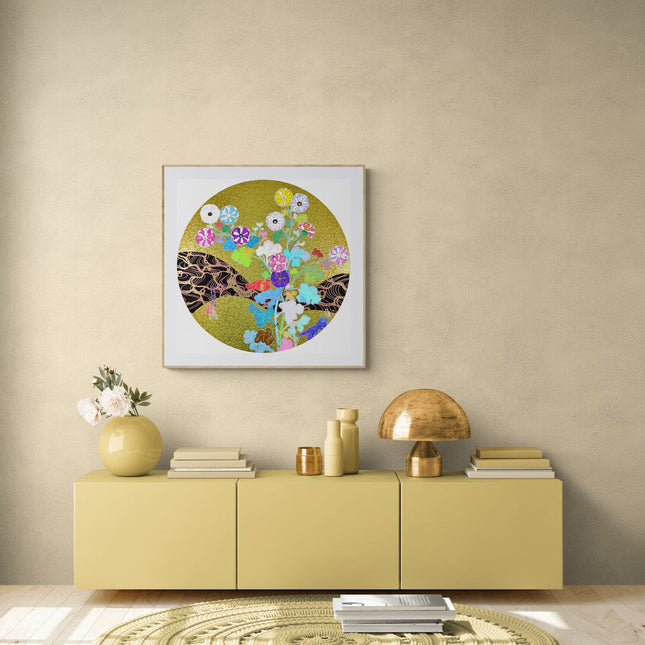
This work is a limited-edition offset print, produced using a meticulous process of cold stamping and high-gloss varnish finishing. Its circular format (71 cm in diameter) emphasises the fluidity of the composition, evoking the idea of a constantly flowing river. The surface reflects light in a unique way, creating a dynamic visual effect that changes depending on the viewing angle.
The central design is dominated by stylised floral forms and golden patterns, a clear reference to the botanical and aquatic motifs Kōrin used in his folding screens and paintings. Rather than merely imitating traditional styles, Murakami recontextualises them through his signature use of vibrant colours and the flattened visual language associated with the Superflat movement.
Ogata Kōrin is renowned for his abstract and sophisticated depictions of nature, skillfully using gold and silver as decorative backgrounds. His work deeply influenced Japanese aesthetics and later artistic movements. Murakami, through his Superflat theory, sees Kōrin as a precursor to this flat, two-dimensional aesthetic, where depth is removed and everything is presented on a homogeneous, stylised plane.
In Kōrin: The Golden River, Murakami transforms the concept of flowing water into a visual stream of patterns and colours in which the ancient and the modern coexist in harmony. The artwork not only pays tribute to the history of Japanese art but also raises questions about cultural reinterpretation in the contemporary era.
This piece aligns with Murakami’s ongoing exploration of the intersection between classical Japanese art and global pop culture. Just as he has reinterpreted Hokusai’s paintings or Edo-period floral patterns, in Kōrin: The Golden River the artist plays with the idea of reproduction and seriality, key elements in both traditional Japanese art and modern mass culture. For readers interested in the artist’s edition practice, Artetrama’s article on Takashi Murakami limited editions offers further context.
Moreover, the artwork reflects his investigation into luxury and ornamentation in contemporary art. The use of metallic and glossy finishes not only references traditional Japanese lacquerware and maki-e, but also engages with the contemporary art market, where exclusivity and mass production coexist in tension. The finishing process also relates to broader discussions around gloss and varnish techniques in printmaking.