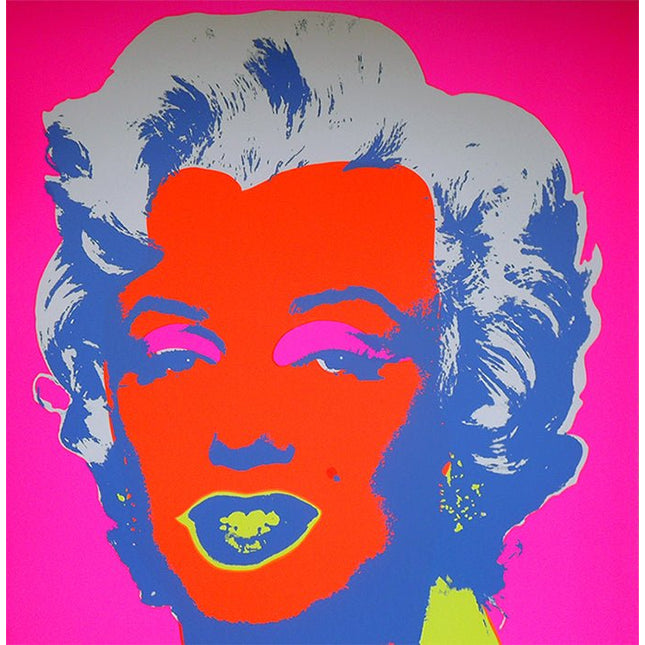
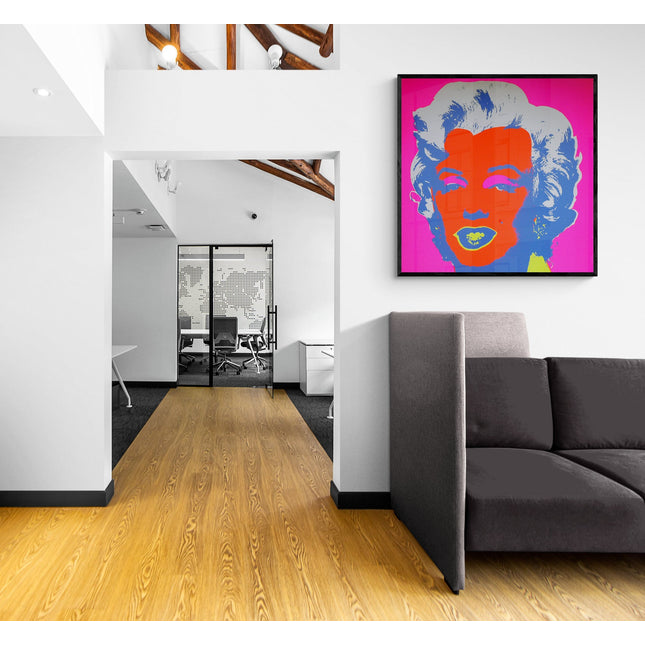
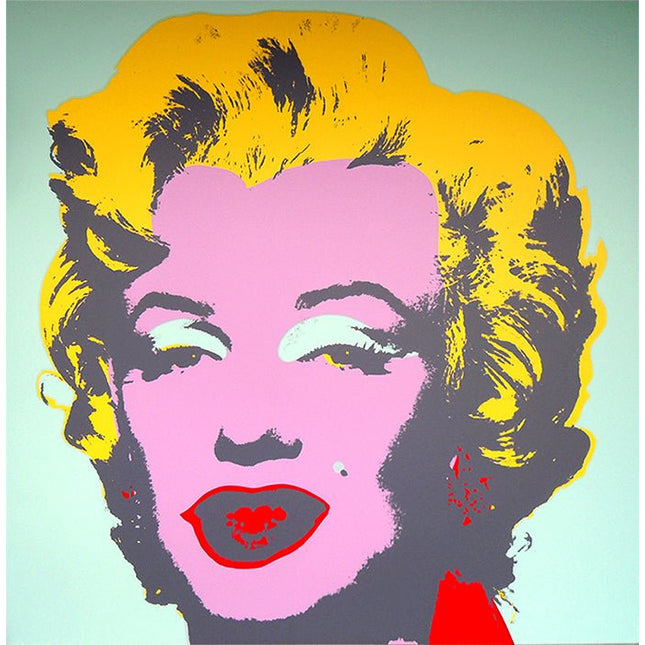
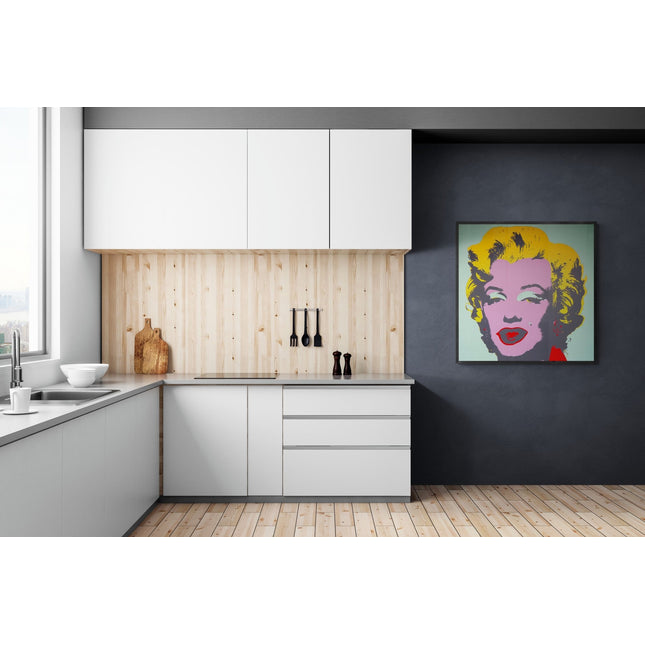
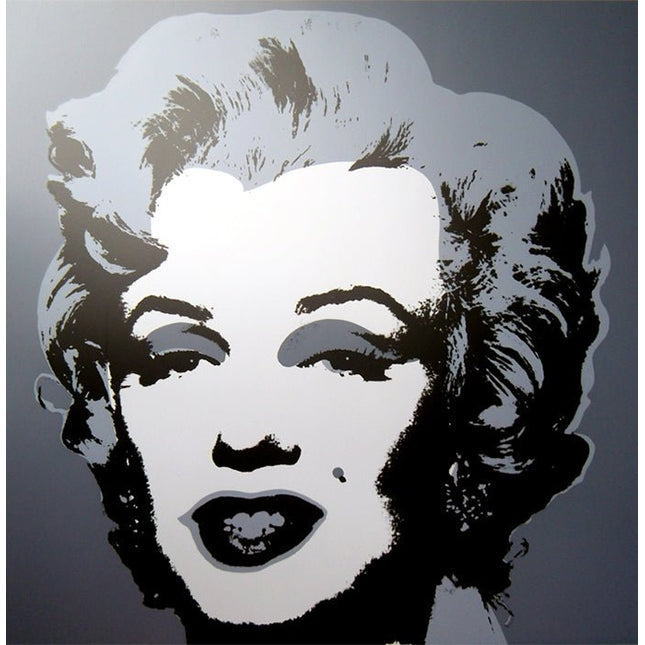
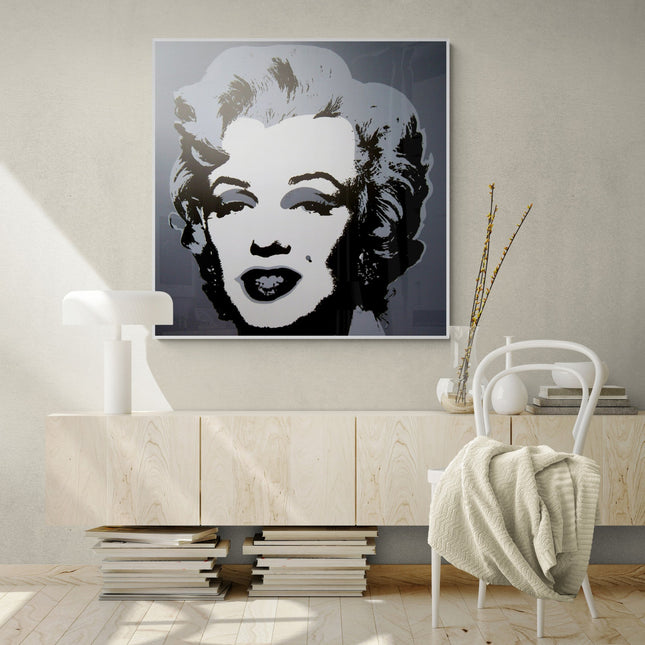
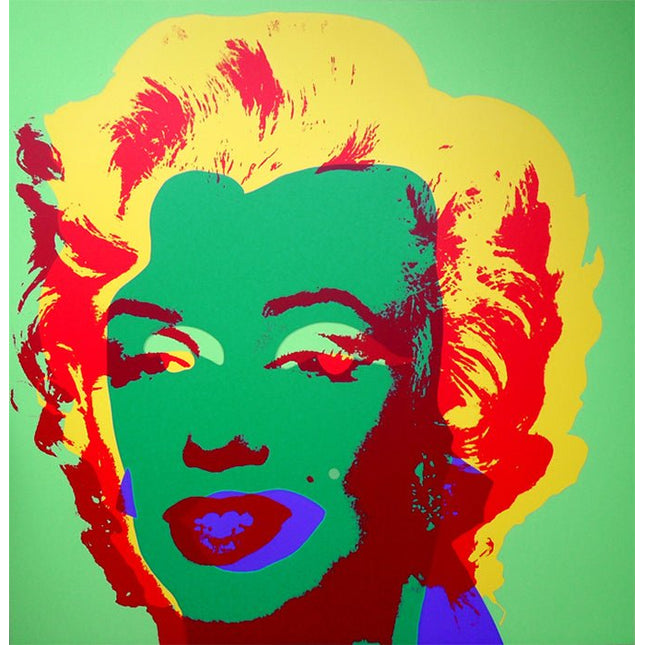
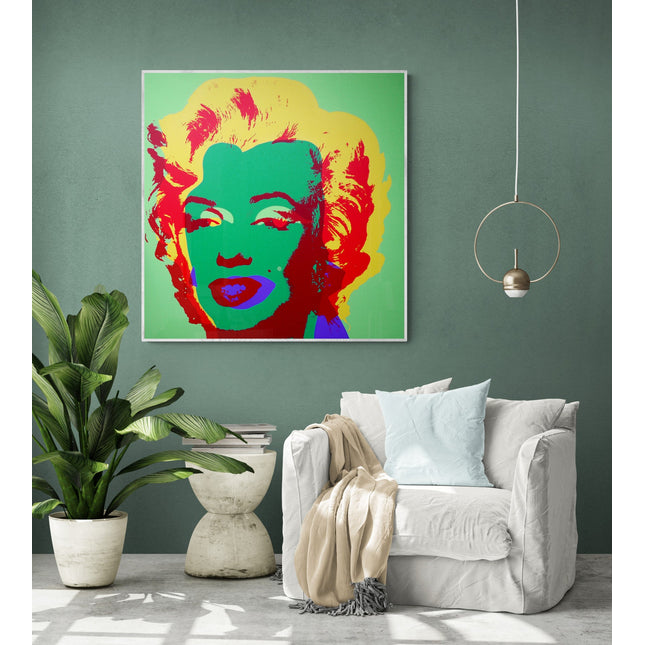
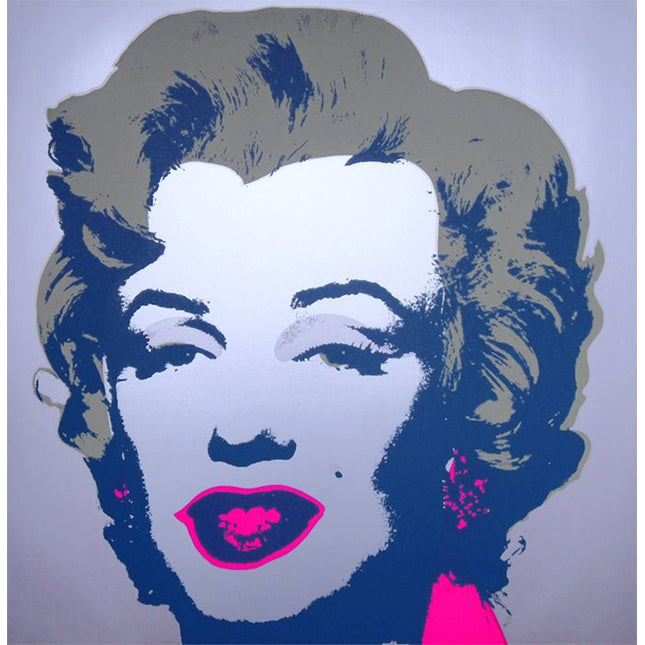
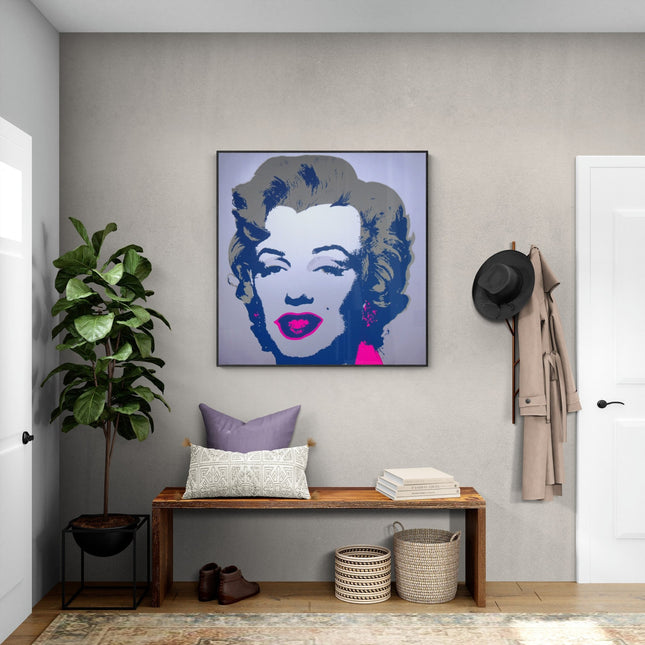
Andy Warhol's Marilyn series, created shortly after Marilyn Monroe's death in 1962, remains one of his most iconic bodies of work and a defining expression of his fascination with fame, mass culture, and consumer society. Warhol drew from a promotional photograph of the actress from the film Niagara and reimagined it through a series of silkscreen prints, each one distinguished by vivid color variations that turn Monroe’s face into a striking pop icon.
Through repetition, Warhol distances Marilyn Monroe from her identity as a person and transforms her into a public image. Repeated in different color combinations, her portrait becomes part of a visual language shaped by Pop Art, where celebrity is both idolized and consumed. The silkscreen technique, which Warhol helped popularize, reinforces this sense of mechanical reproduction and reflects the way mass media turns identity into something reproducible and impersonal.
Marilyn also speaks to mortality and the fragility behind fame. By choosing Monroe shortly after her passing, Warhol evokes the transience of life while suggesting how celebrity images can outlive the person behind them. That same tension between icon and object is echoed in this contemporary presentation, which gives the work a clean, luminous presence. For a deeper look at this subject, see our article on Andy Warhol’s Marilyn Monroe series.
Presented as a neon flex piece, it combines visual impact with practical LED technology. The flexible LED tube is safe and environmentally friendly, and the light can be adjusted to suit the time of day.
©/®/™ The Andy Warhol Foundation for the Visual Arts, Inc.
Each sign is made of neon flex material, consisting of PVC or silicon piping with LED lights, mounted on a recycled acrylic board. These materials make it possible to create realistic neon signs with bright light and intense color, while being more durable, affordable, and sustainable than traditional neon. You can also explore more neon art and design pieces on Artetrama.
Sustainability is taken seriously thanks to LED lights that consume 6 times less energy than traditional lighting and can last up to 100,000 hours. This neon is crafted using recycled materials and 100% recycled packaging, including the removal of unnecessary plastic.