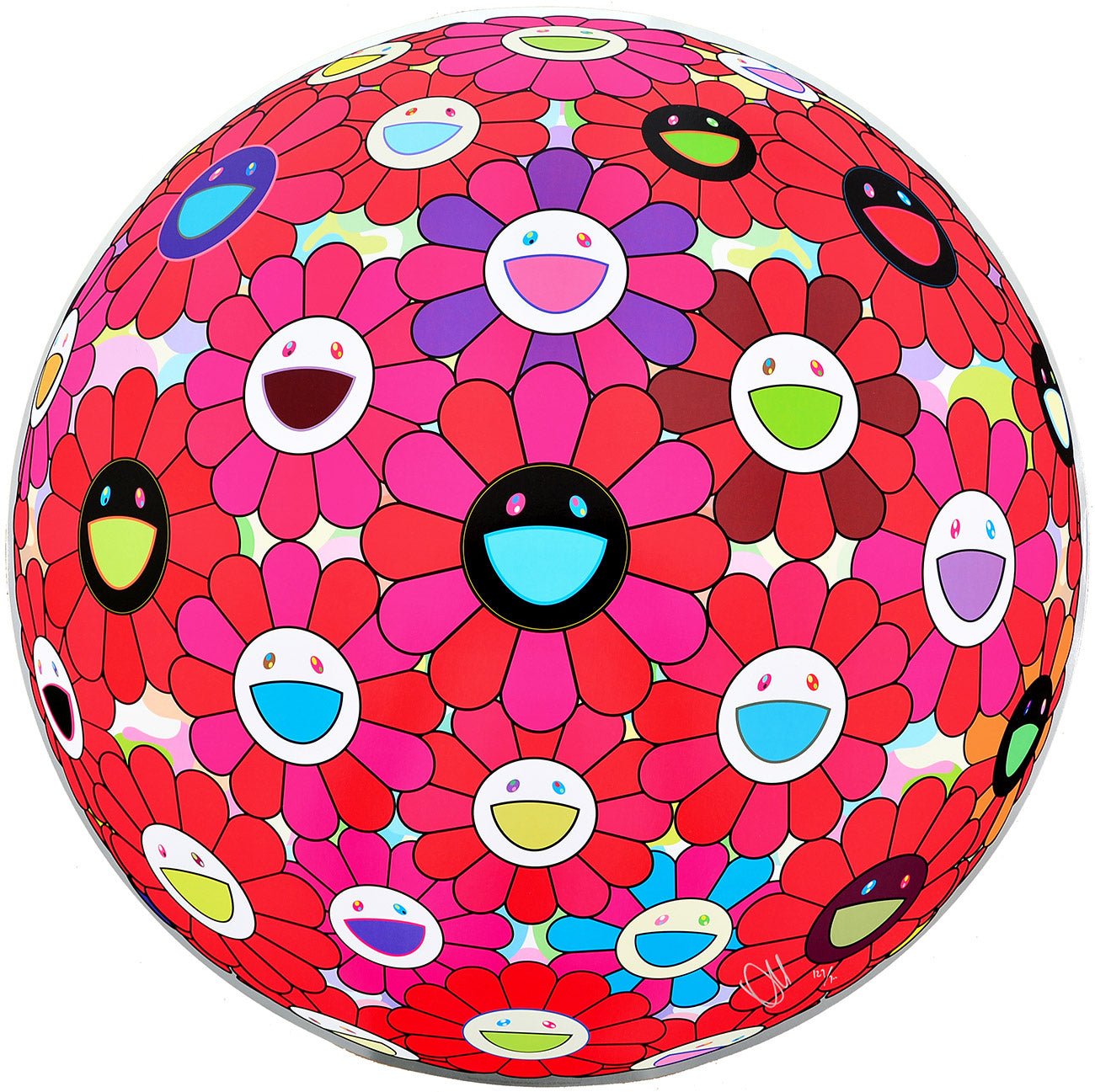
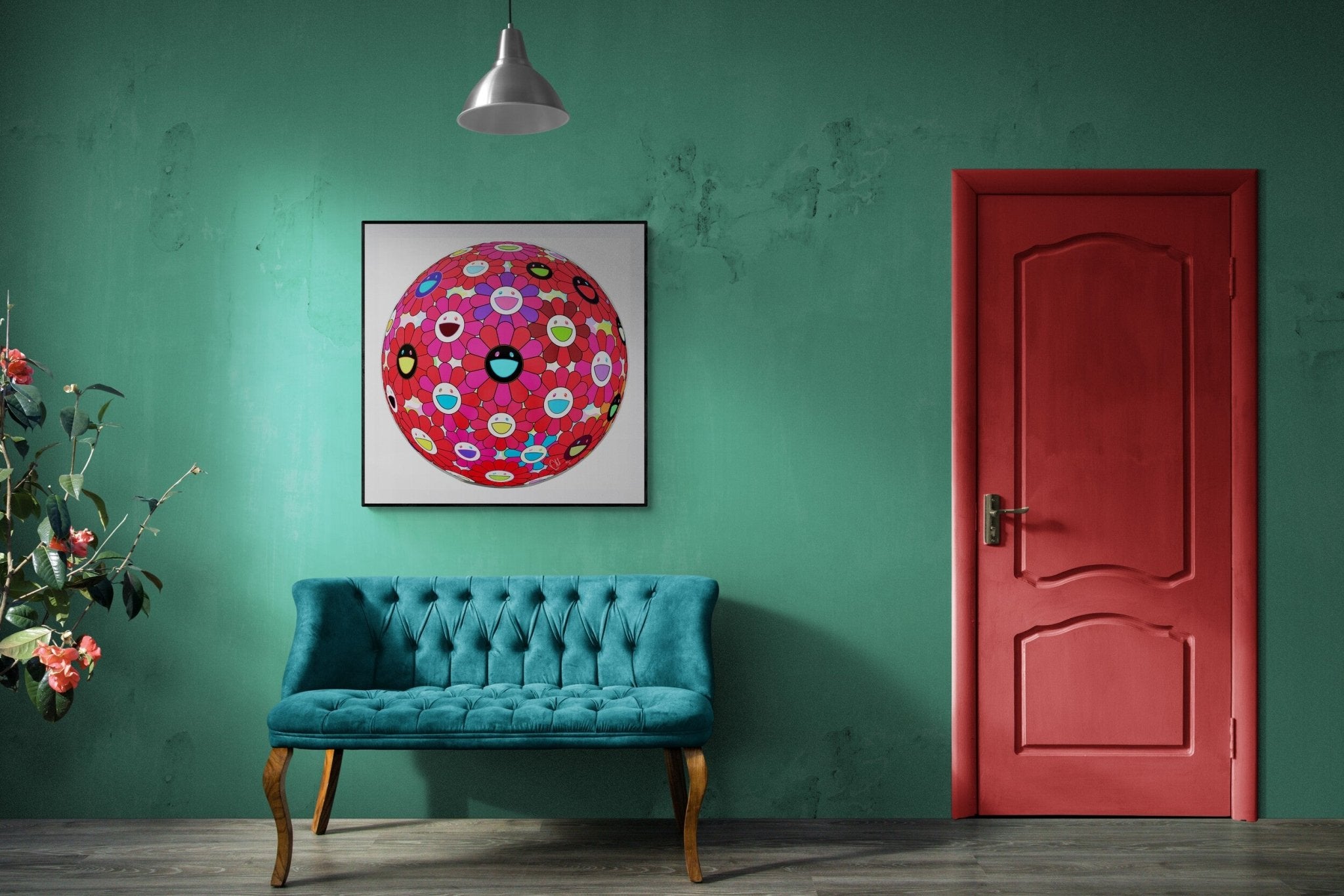
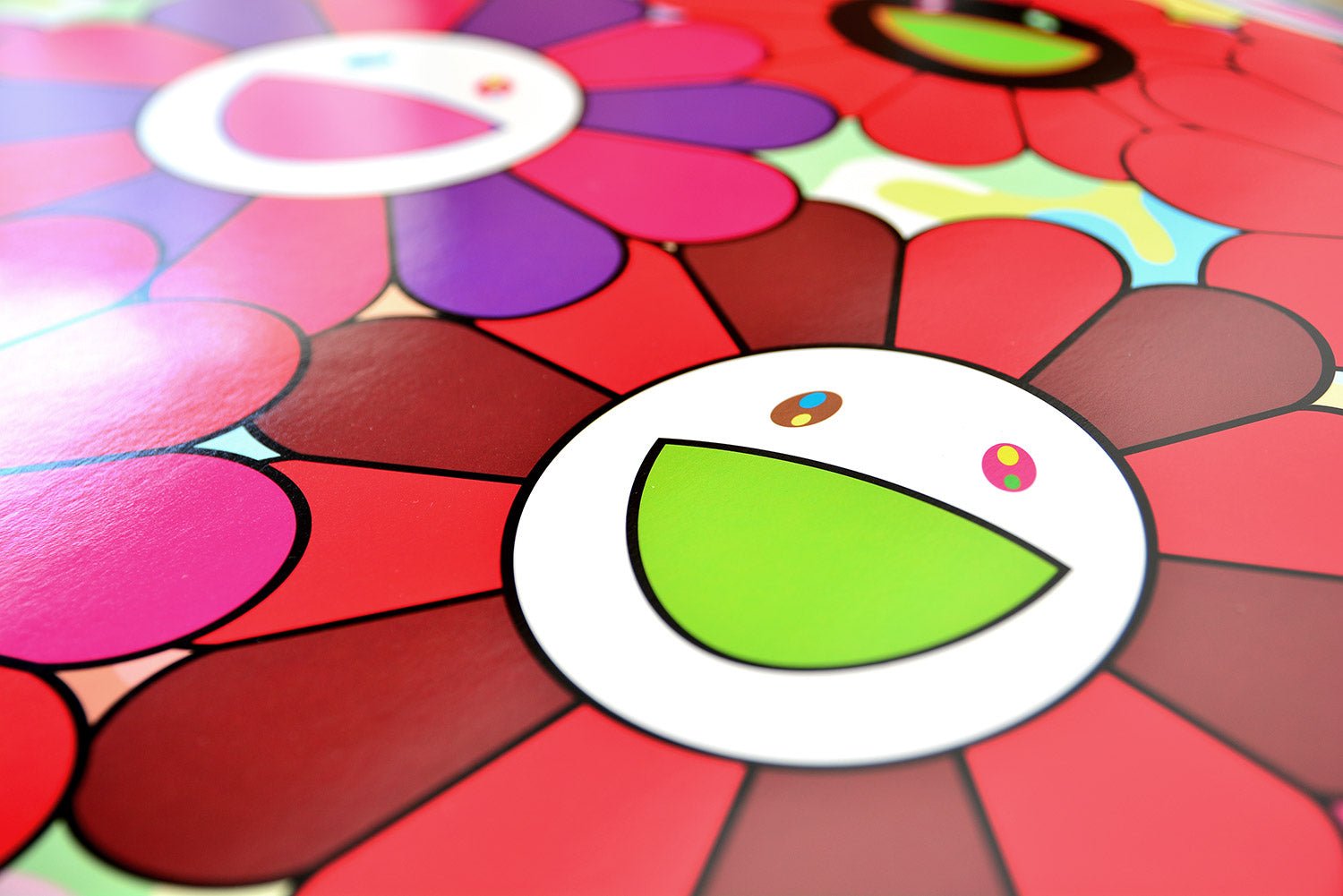
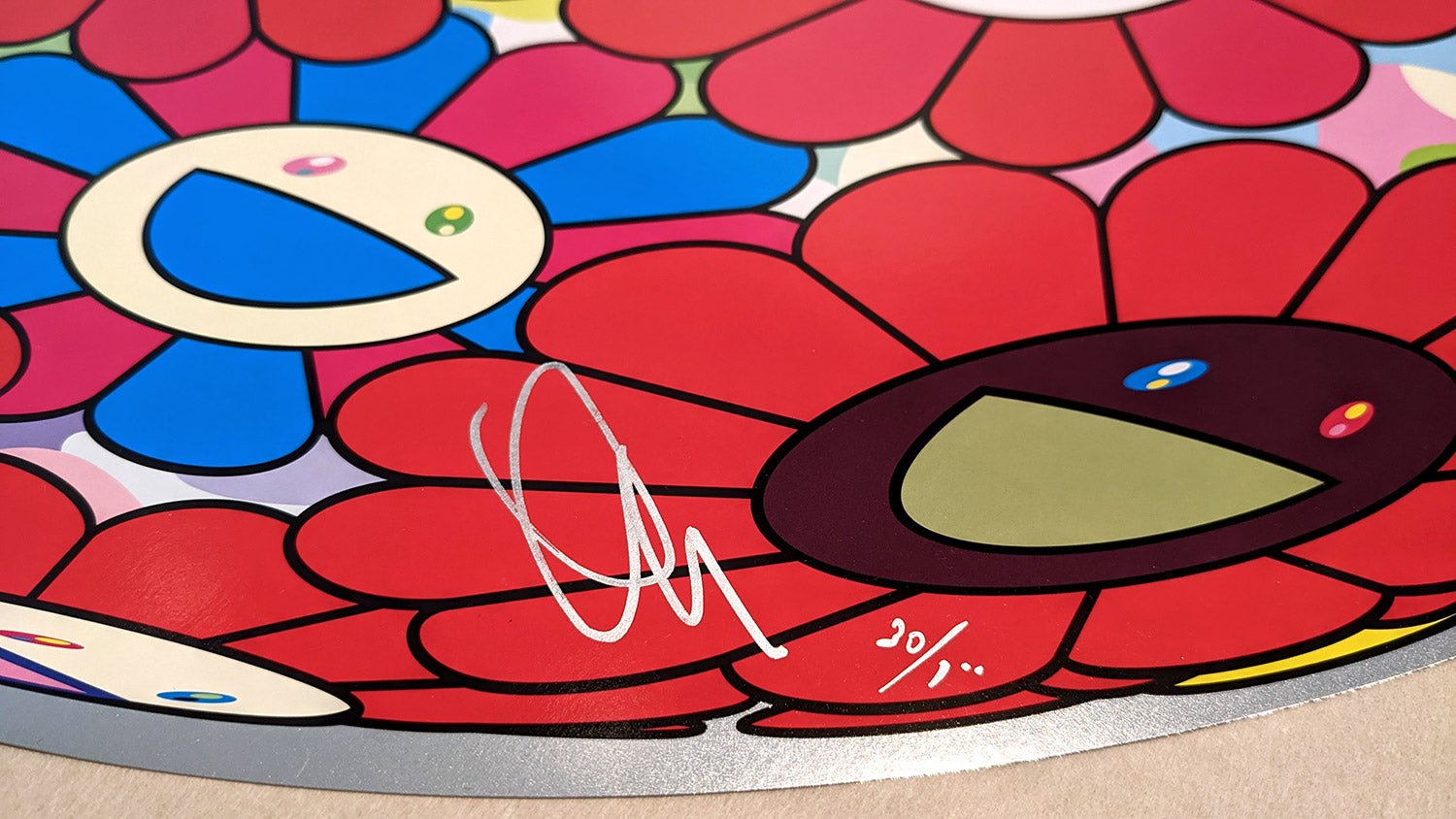
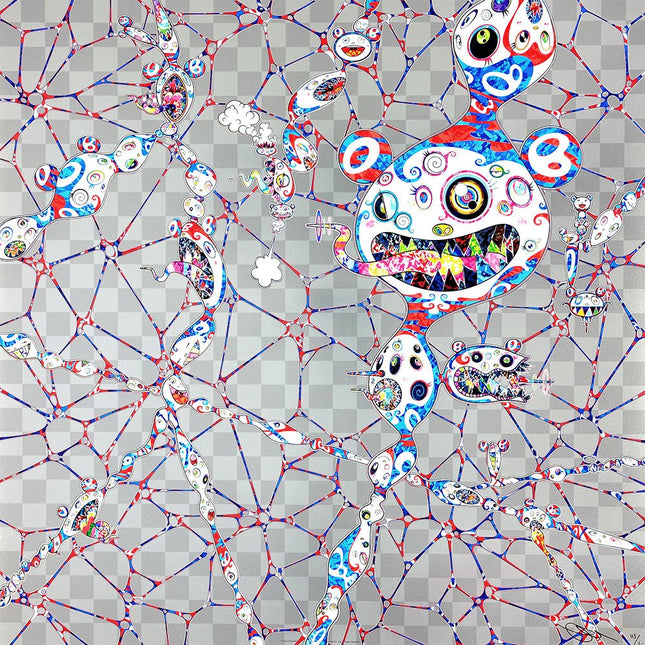
Offset lithograph with silver and high gloss varnishing on paper, hand signed and numbered by Takashi Murakami. Limited edition of 300, published by Kaikai Kiki Co.
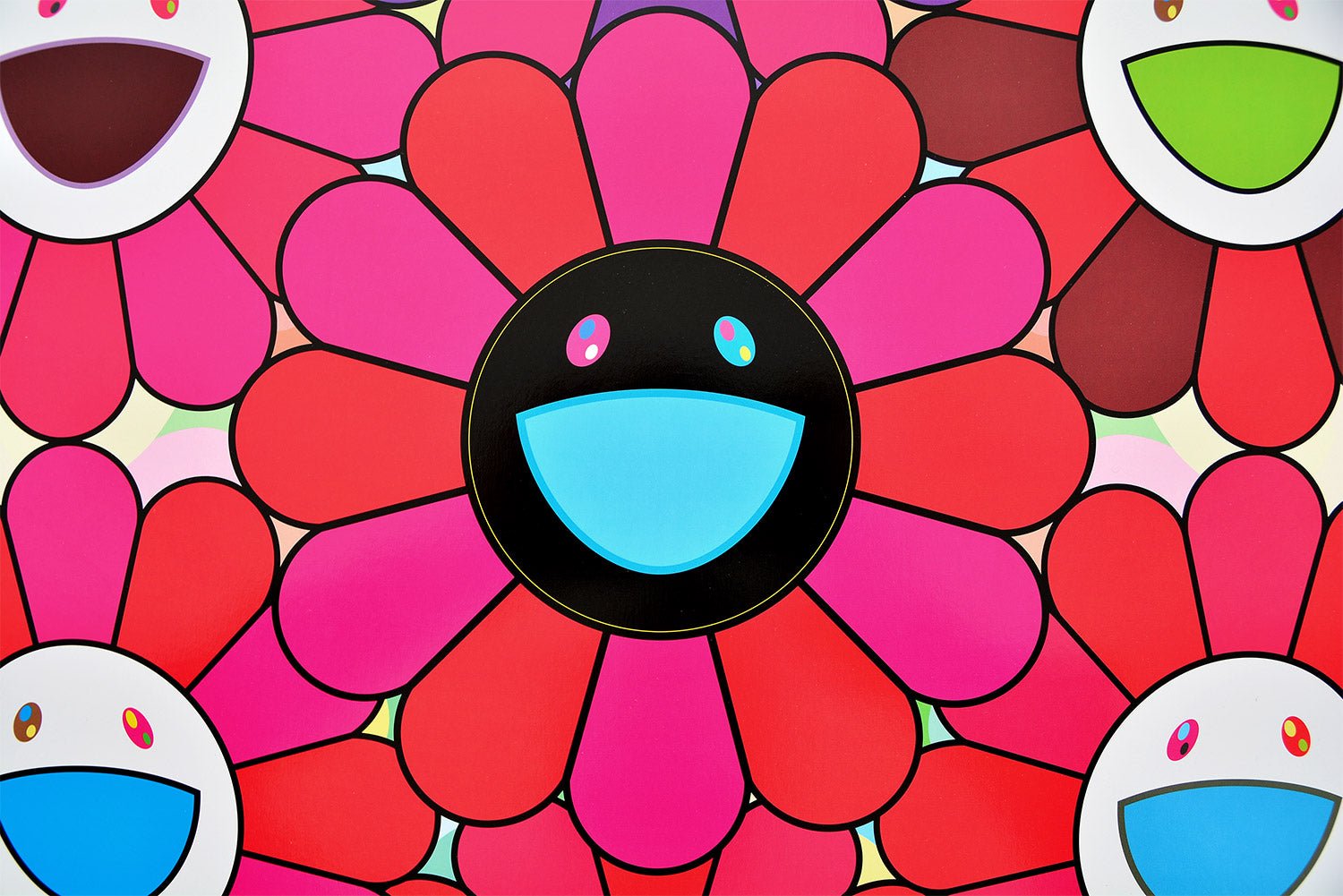
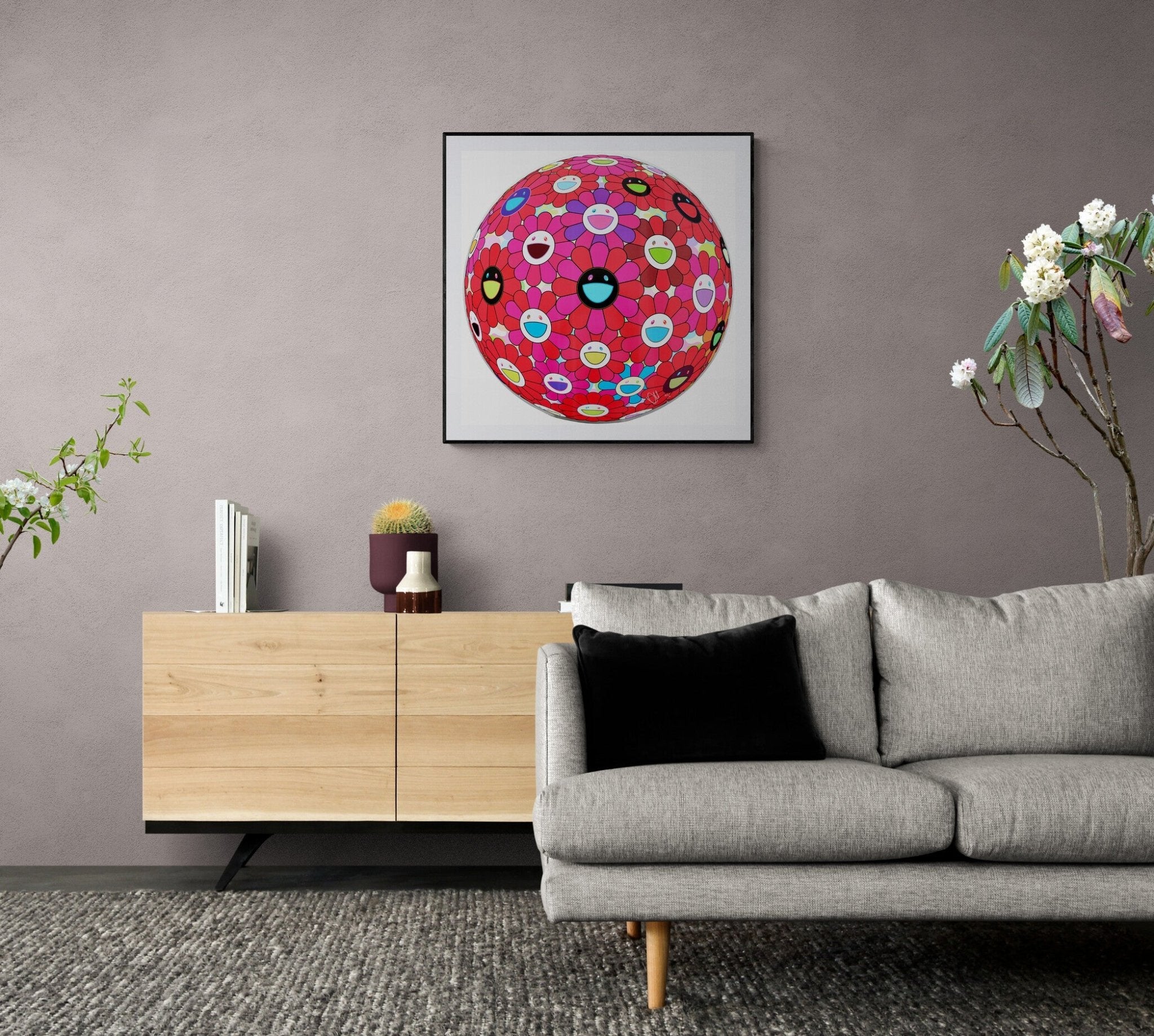
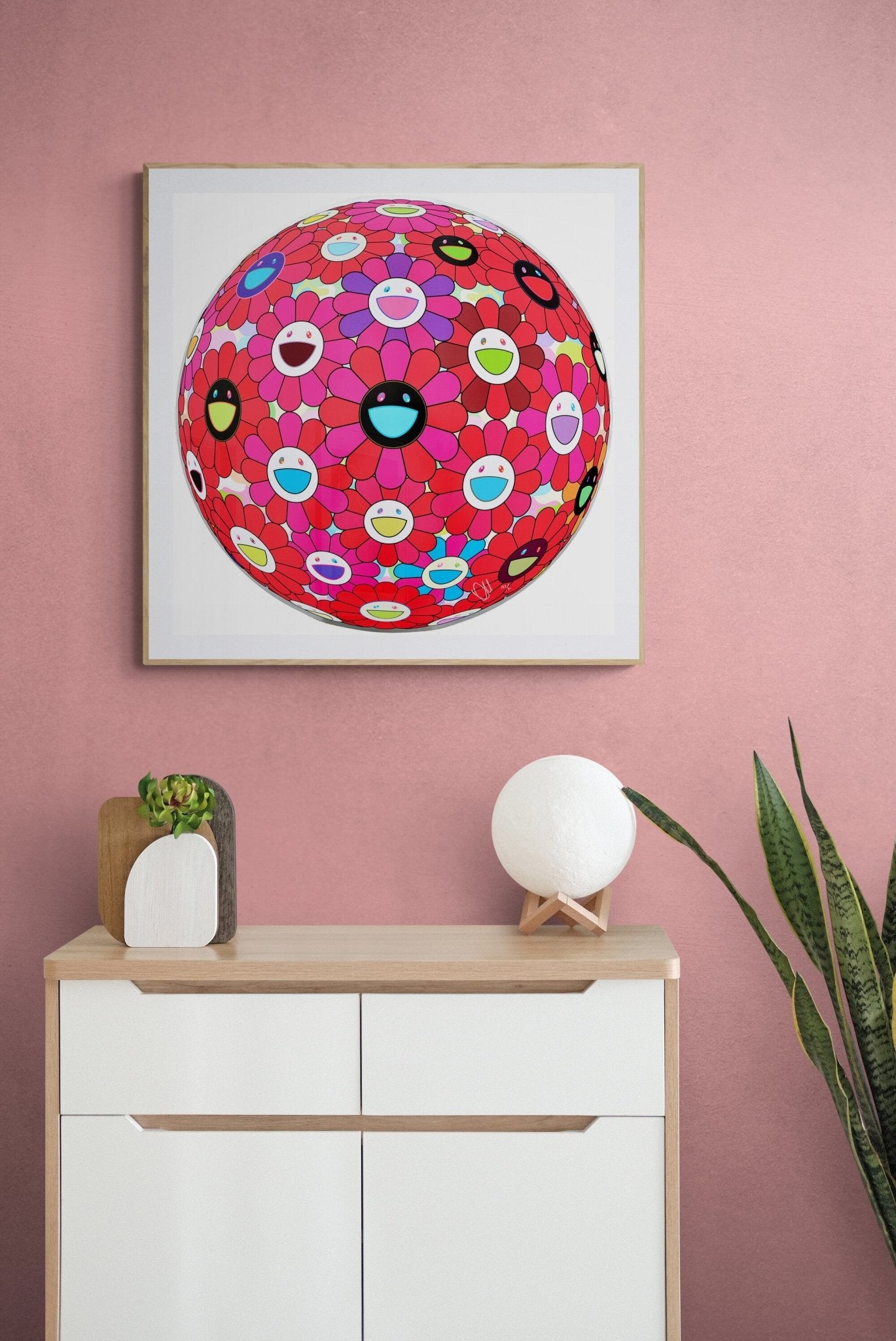
Flower Ball: Burning Blood is one of the variations within Takashi Murakami’s iconic Flower Ball series, in which the artist transforms his signature smiling flowers into a vibrant, hypnotic sphere. In this version, titled Burning Blood, colour assumes a central role: the warm palette, dominated by reds, oranges, and pinks, conveys a striking sense of intensity, heat, and restless energy, while extending the visual language explored throughout Murakami’s artistic universe.
The spherical format reinforces the idea of total immersion, as though the viewer were being drawn into a sealed world of artificial, all-encompassing happiness. Murakami plays with the obsessive repetition of his flowers, which seem to unfold in a pattern without beginning or end, creating a visual experience that hovers between delight and unease and belongs fully to the logic of the Superflat movement.
Beneath its vivid and playful surface, Burning Blood carries a deeper tension. The insistent use of reds and oranges can be read as an echo of the fires that devastated entire cities during the Second World War, particularly in the aftermath of Hiroshima and Nagasaki, while the smiling flowers suggest the fragile construction of optimism over historical trauma. This layered emotional register is central to Murakami’s treatment of flowers more broadly, where seduction and disquiet are often held in delicate balance, and it also resonates with his place within contemporary pop art.
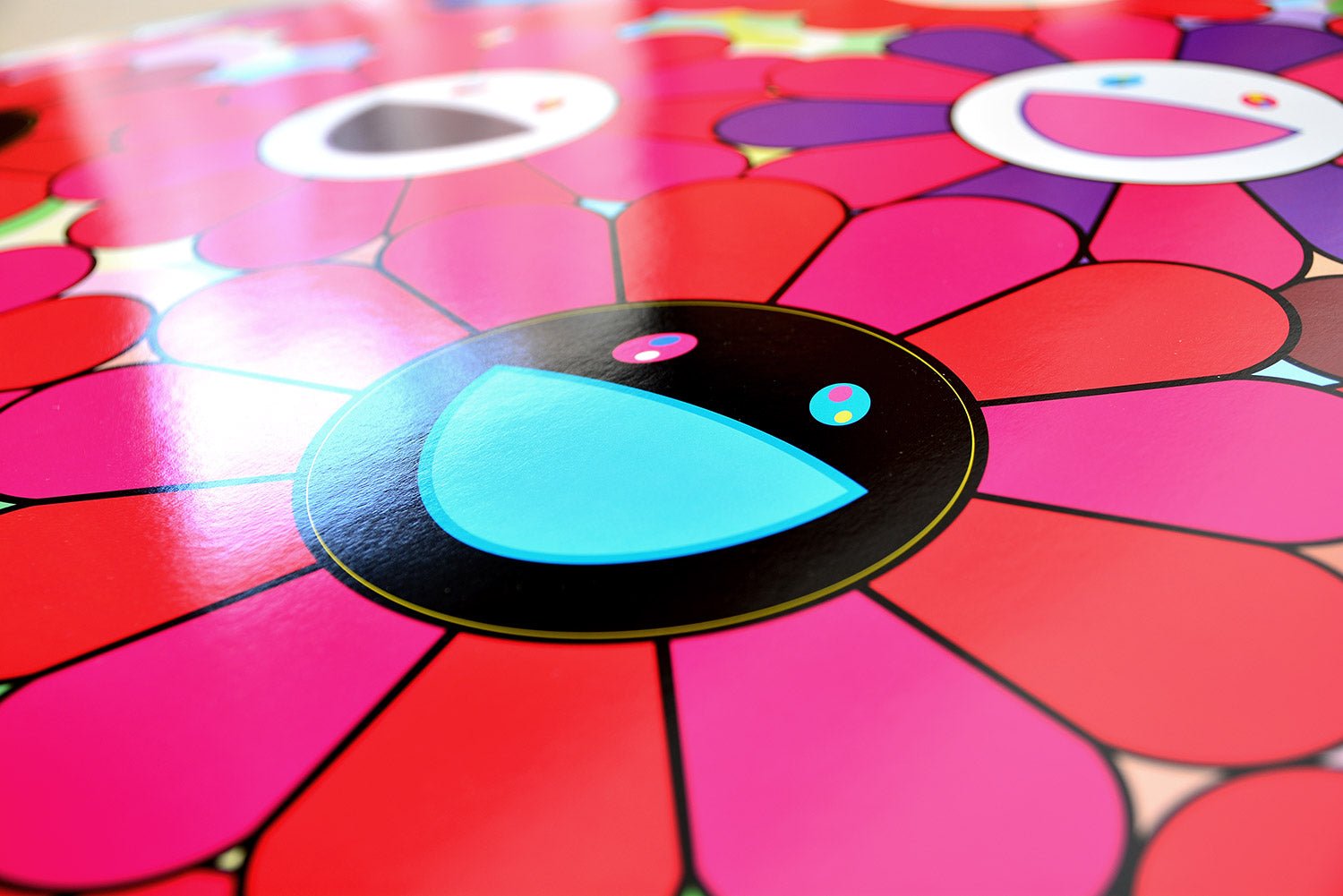
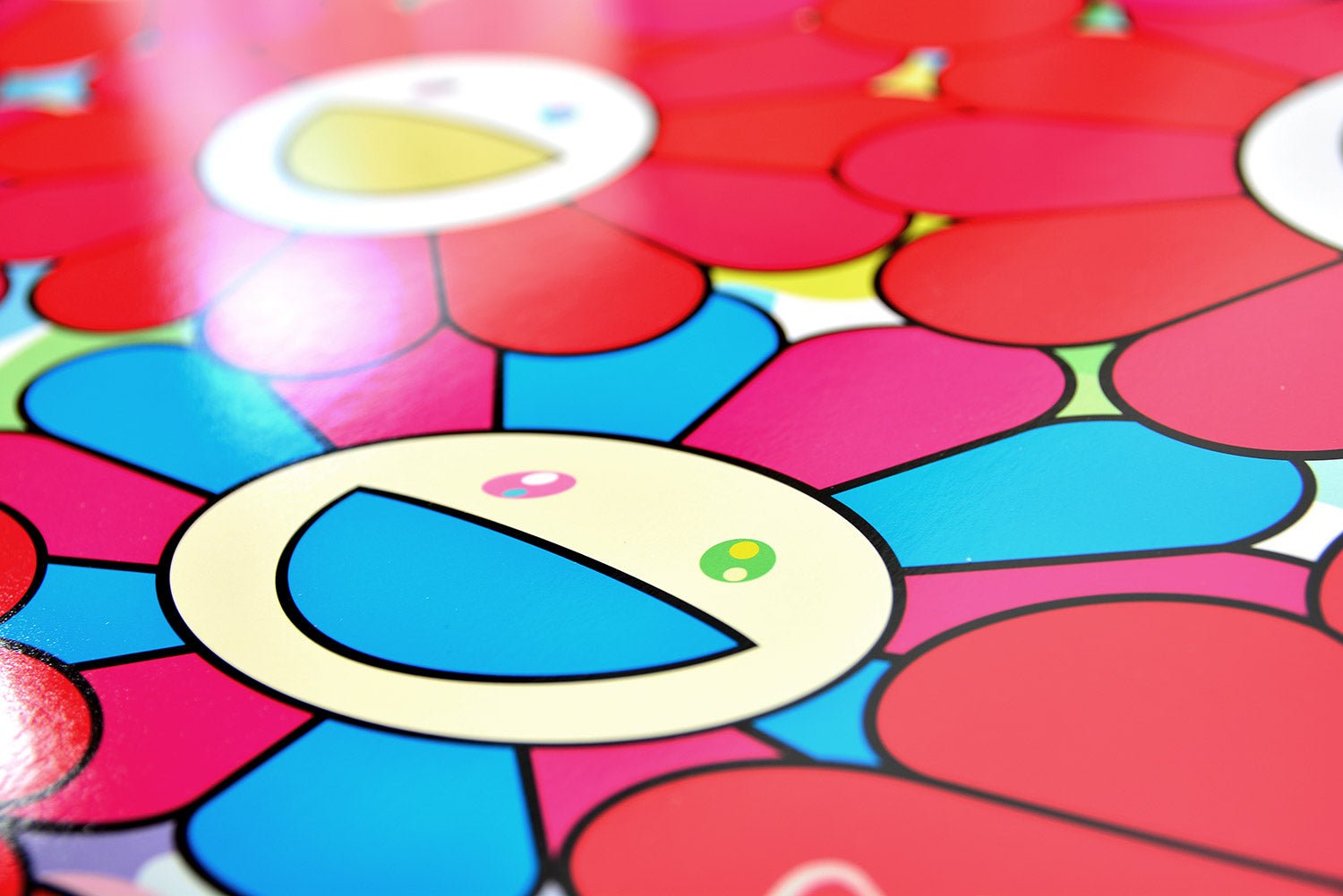
The work also brings together material sophistication and conceptual clarity: the silver and high gloss varnishing heighten the surface effect, intensifying the artificial radiance that defines the image. For collectors interested in both technique and context, Artetrama also offers further reading on gloss and surface finishes in printmaking, contemporary print techniques, and buying fine art prints.
Flower Ball: Burning Blood is a telling example of Murakami’s ability to turn an apparently simple motif into a complex image of collective psychology, visual pleasure, and suppressed memory. In that sense, the work shows how his flower imagery moves beyond decoration to become a potent reflection on contemporary culture, repetition, and the manufactured aesthetics of happiness.